Jobseeker-initiated messages
01 Scope
This is a zero-to-one incubator project. We focused on iterating quickly to find the product-market fit and were eventually acquired by the core Indeed Messaging team.
02 My role
Led UX/UI and research, facilitated design workshops, partnered with PM to define the roadmap.
03 Team
1 UX designer, 2 Developers, 2 PMs
Origin story
An executive asked our team to explore how “Chatbot” technology can be helpful for Indeed. We hypothesized that a “Chatbot” could help answer frequently asked questions or screen candidates automatically.
To move quickly, we used a “fake bot” –a real human being giving responses– as our MVP. We discovered that both jobseekers and employers found more value in real human connections. Our team redefined the problem space. The "jobseeker-initiated message" was born.
PROBLEM
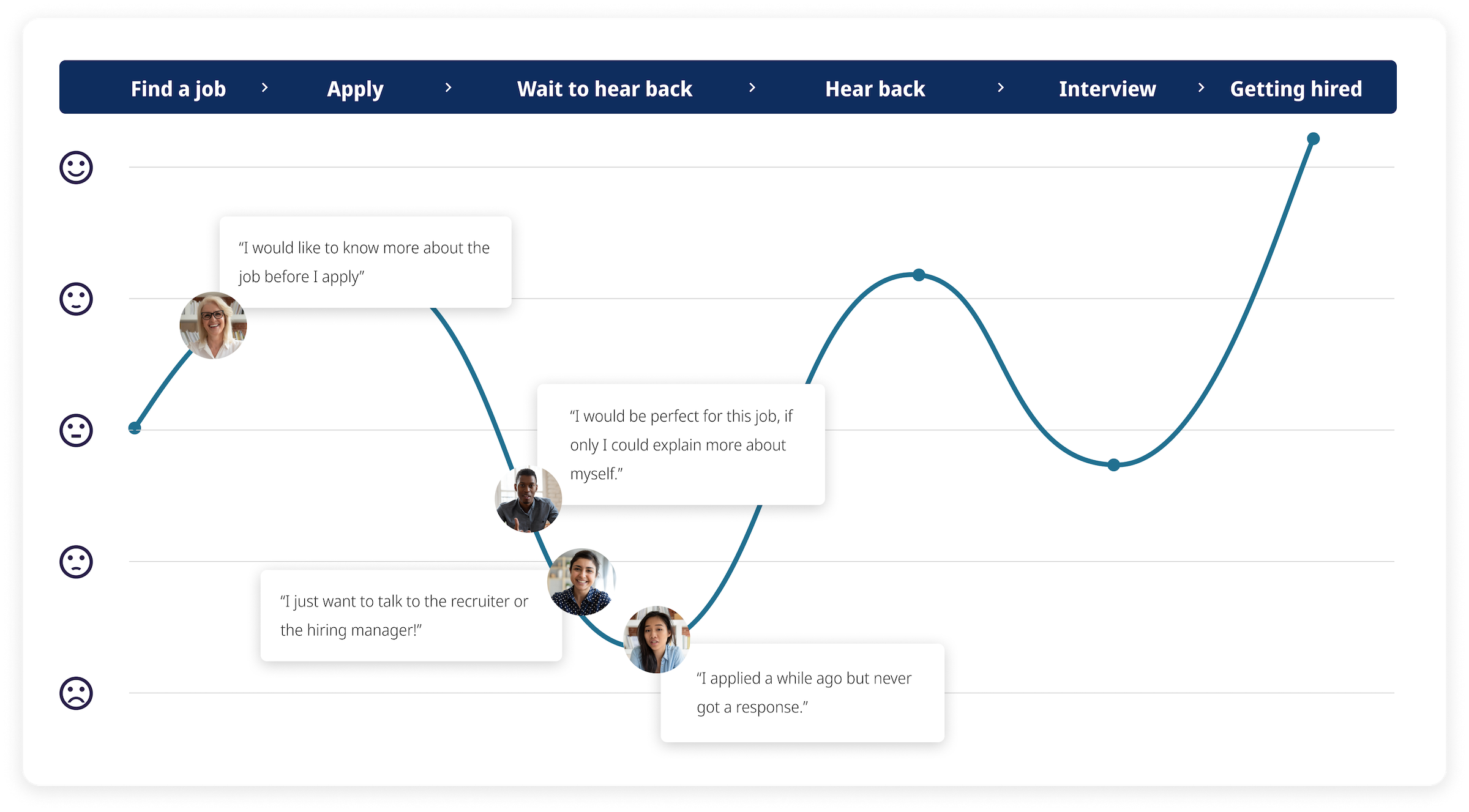
Online applications without human interactions result in low engagement.
Jobseekers lack a way to learn more about the job, to build rapport with the employers, or to follow up when they don’t hear back. Employers don’t have a strong indicator to determine serious applicants.
SOLUTION
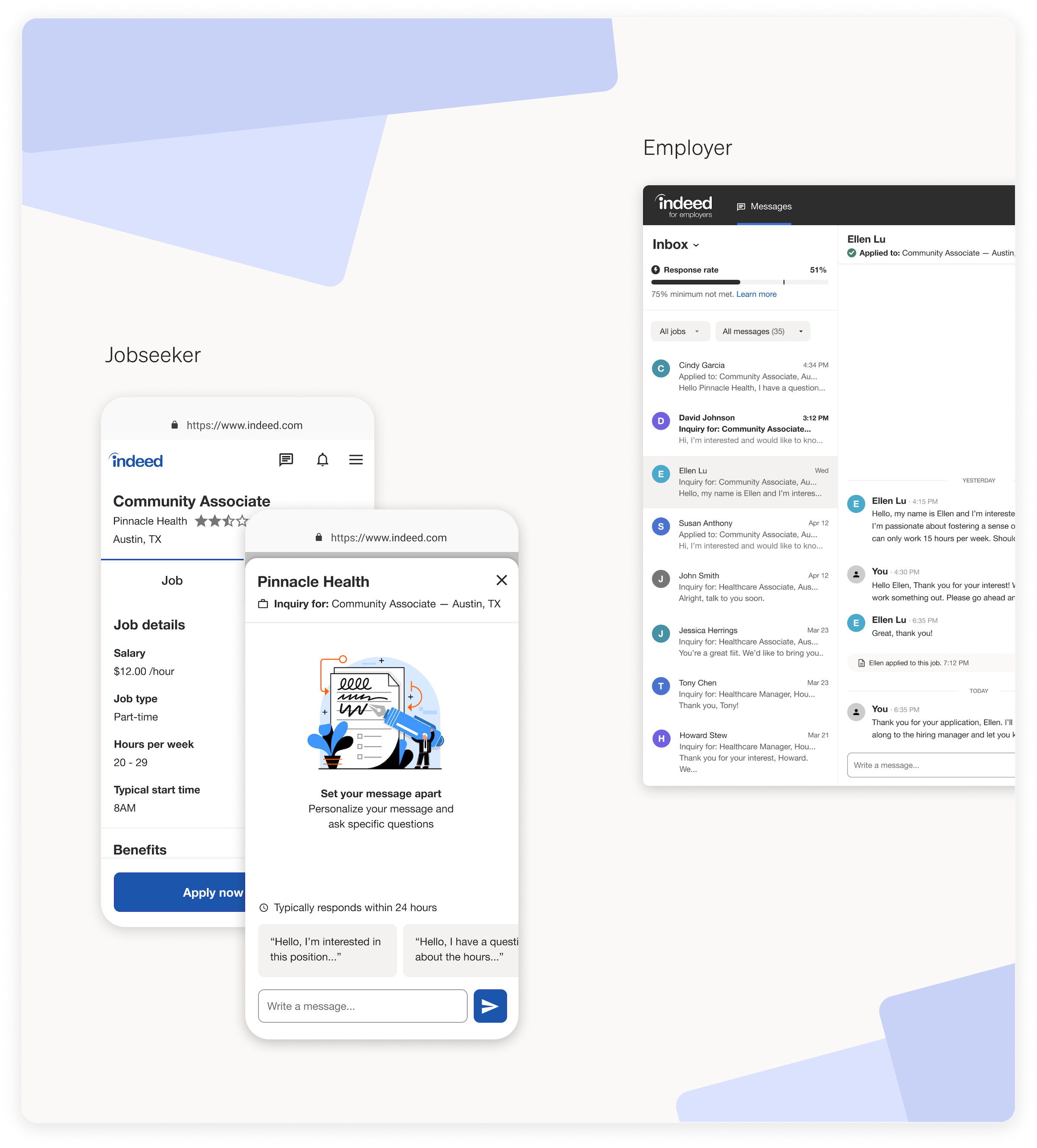
Let jobseekers start a conversation with the employer.
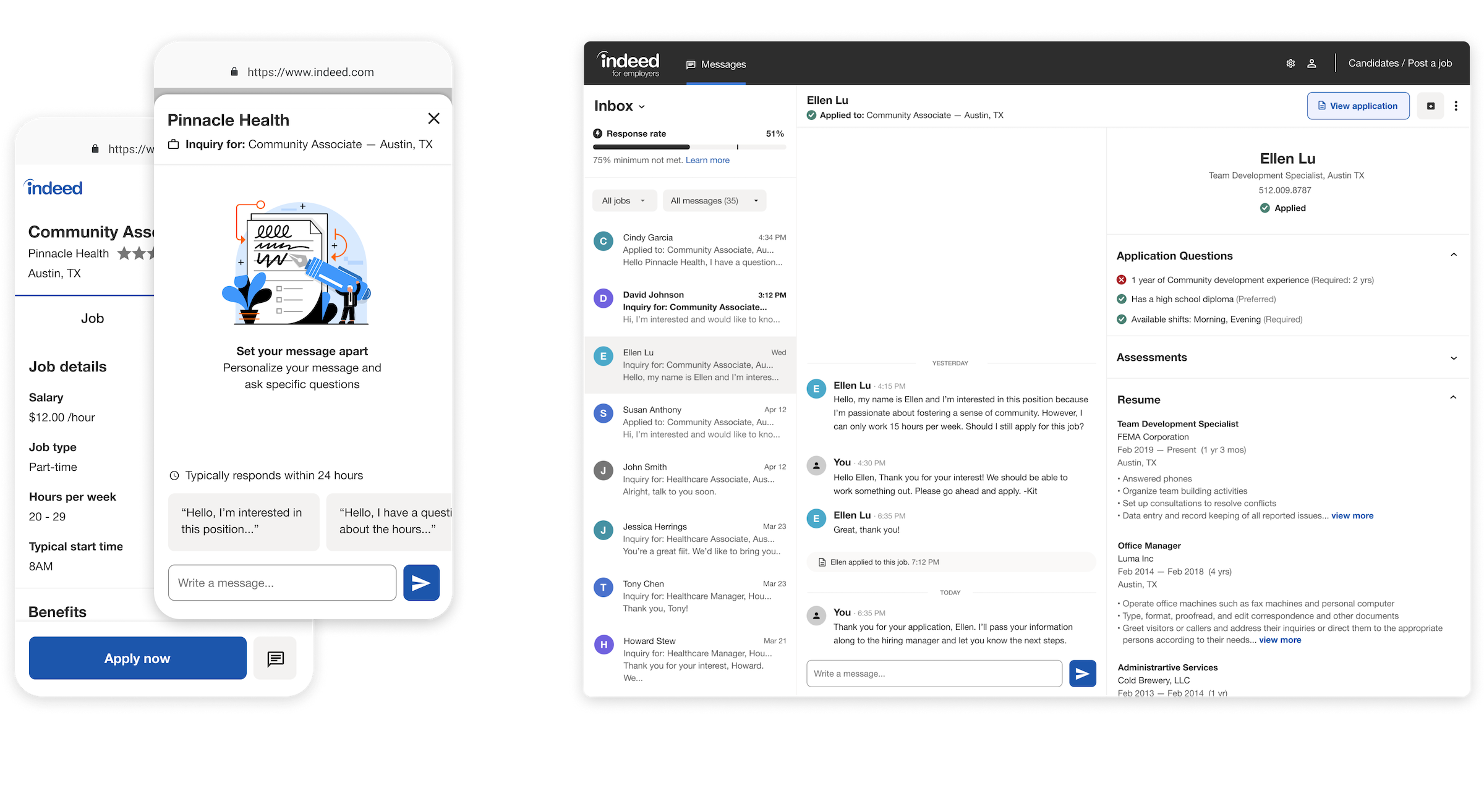
As an Incubator project, we need to move quickly and weren’t able to get on the Indeed Core Messaging team’s roadmap for integration right away. So, we built our own messaging platform to validate this concept.
RESULT
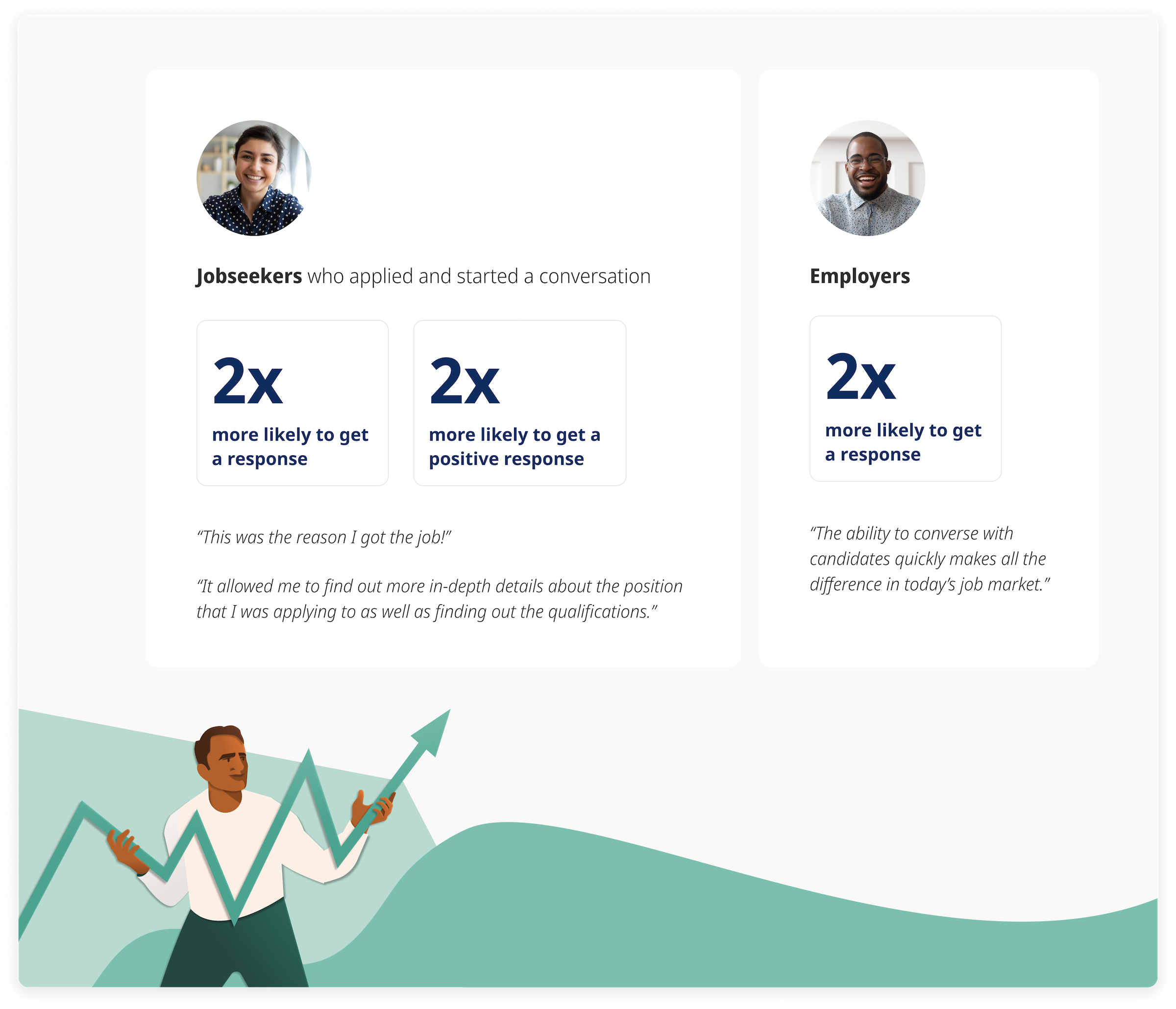
We drove 2x higher engagement between employer and jobseeker.
The core Indeed Messaging team acquired this feature.
WORKFLOW
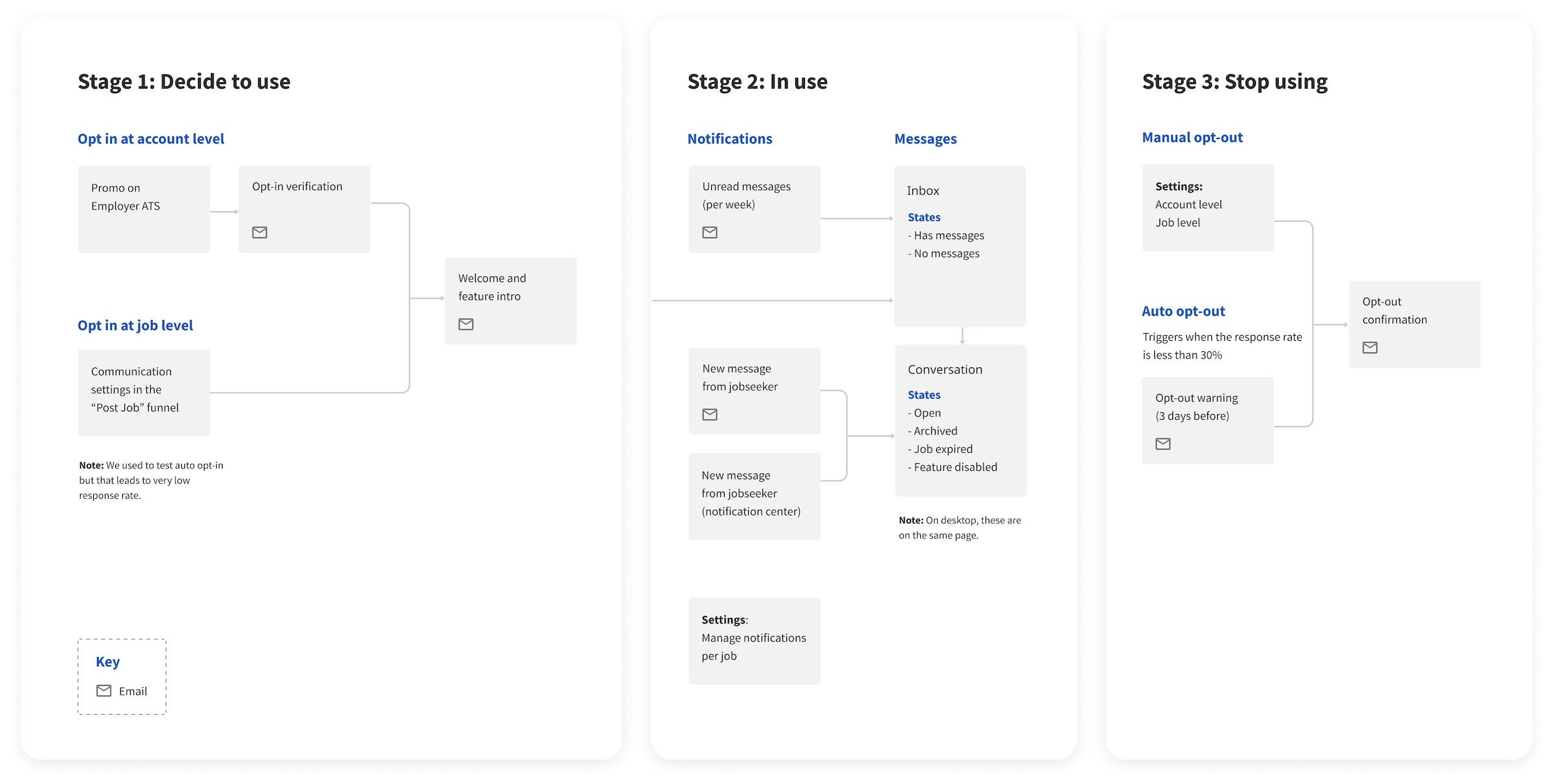
Employers need to opt-in to allow jobseekers to initiate the conversation.
WORKFLOW
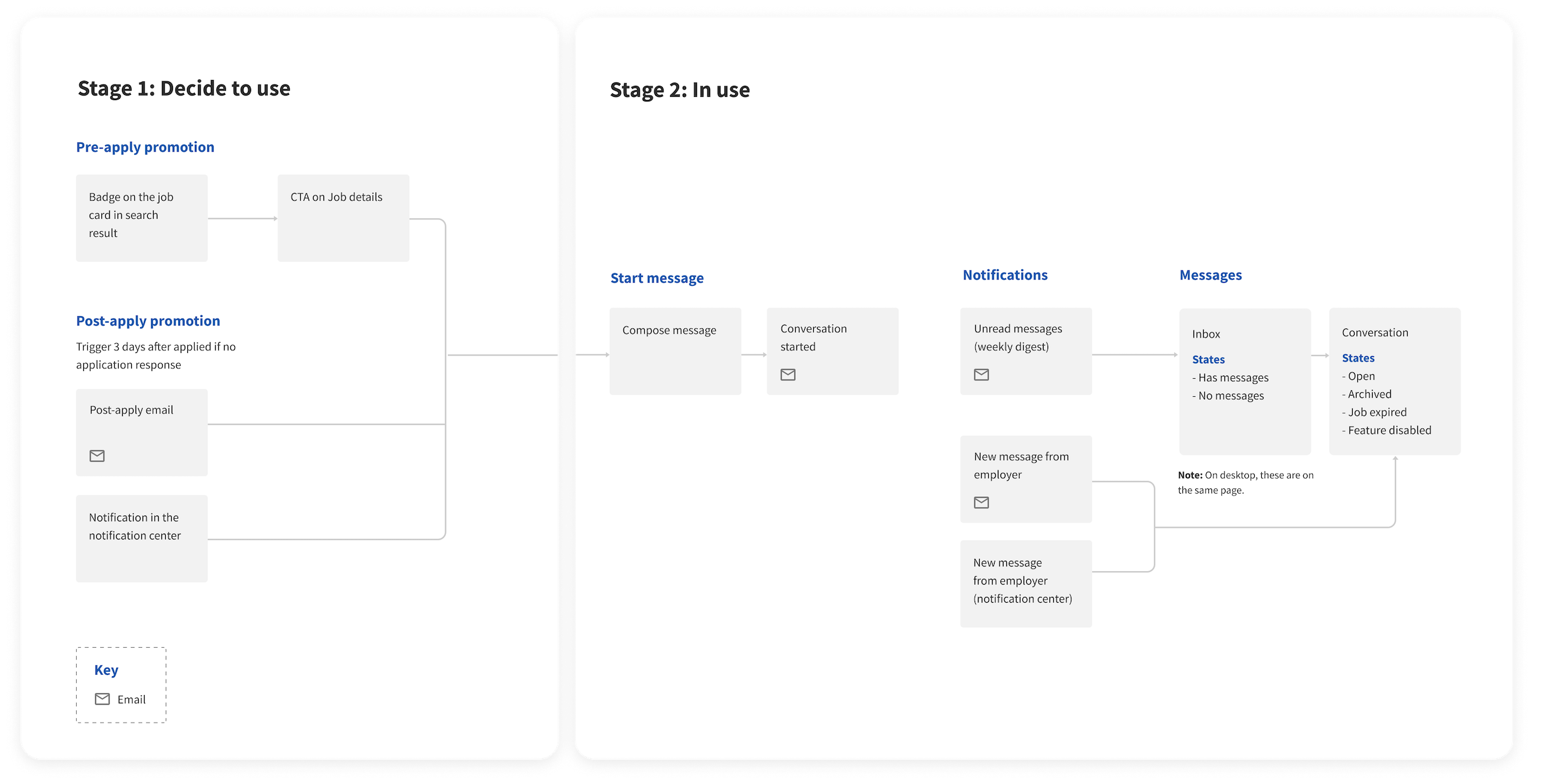
Jobseekers can start the conversation instead of waiting for the employer.
PHASE 01
Will jobseekers start a conversation?

Target Jobseeker
After research and analysis, I’ve identified that jobseekers who wanted to use this feature were:
Actively applying
Urgently looking to start ASAP
Serious applicants
Motivations
Introduce themselves
Ask about job details
Find out application details
Follow up on application status
THE STARTING POINT
I iterated on ways to let jobseekers start the conversation.
Version 1
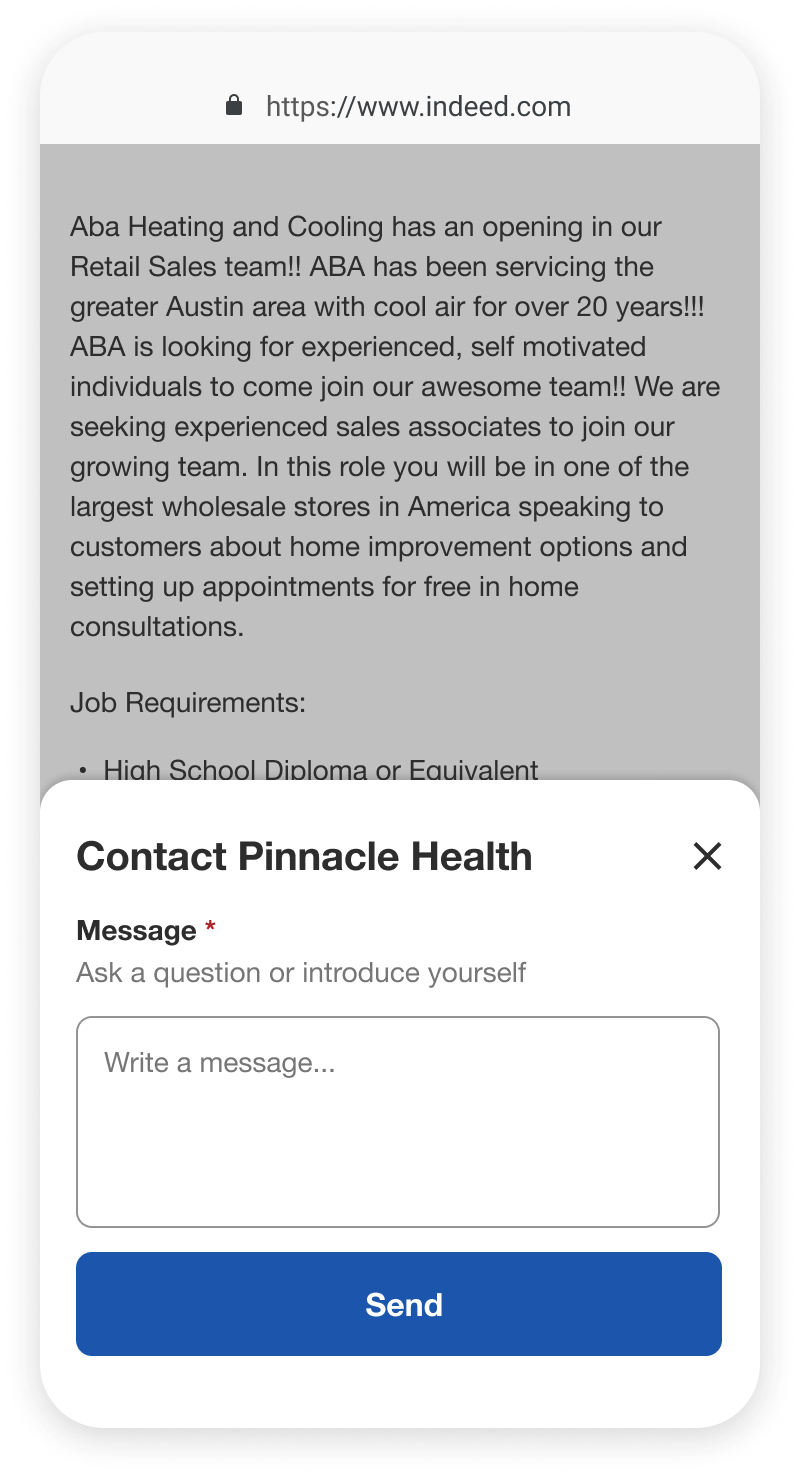
Based on my user research, jobseekers didn’t know what type of messages they could send.
Version 2
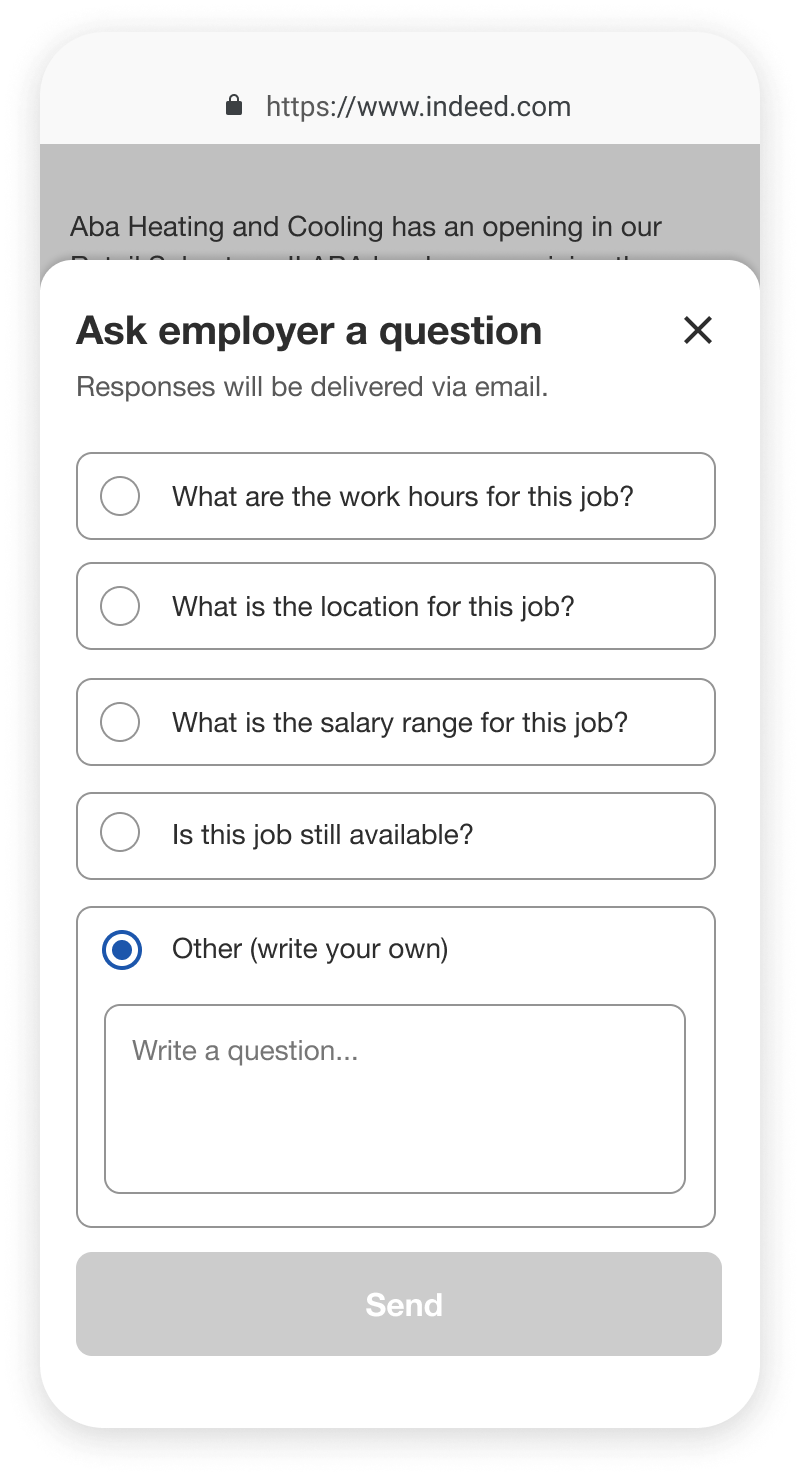
In this version, jobseekers felt more confident to send a message. However, this did not facilitate further conversations after the initial response.
Final
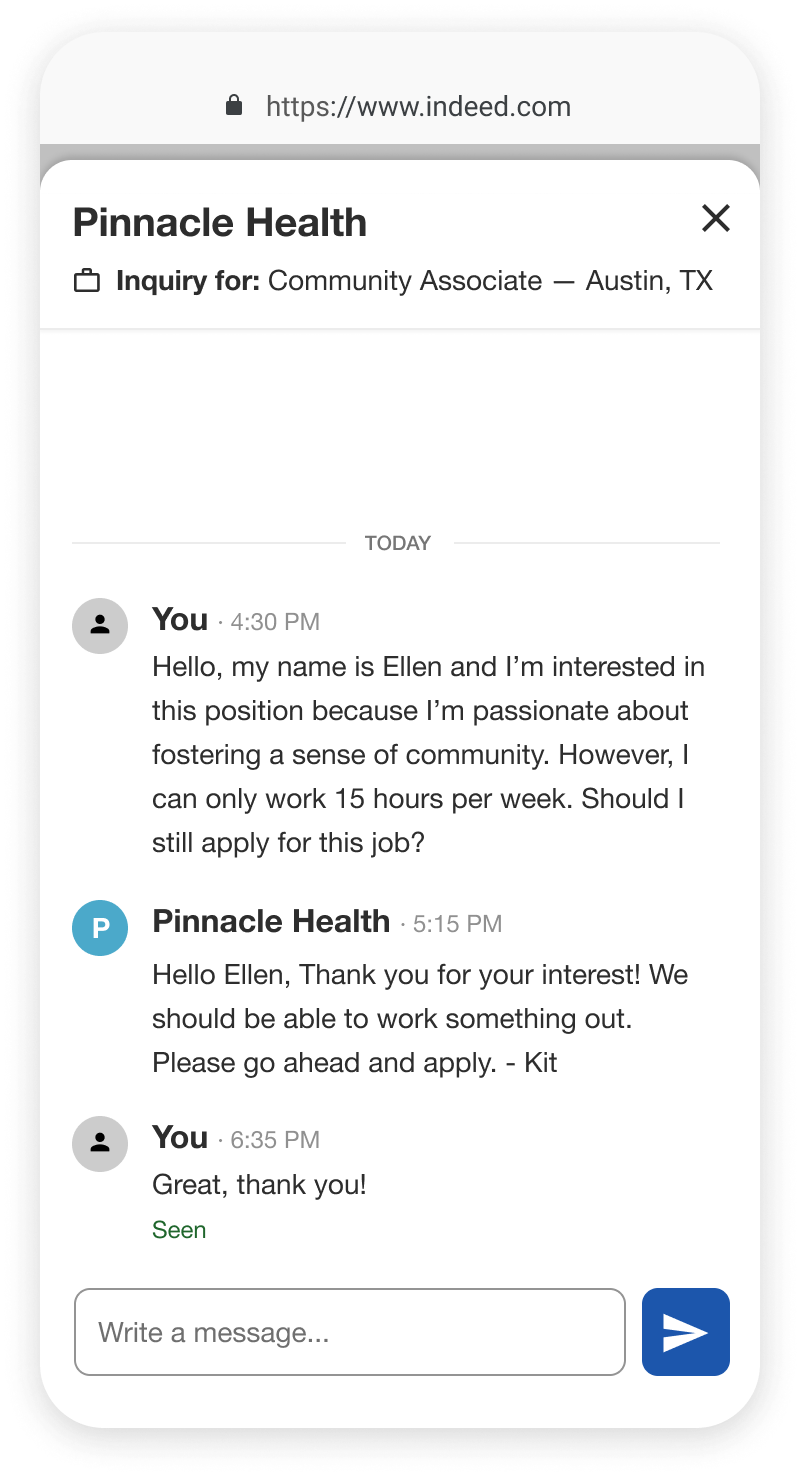
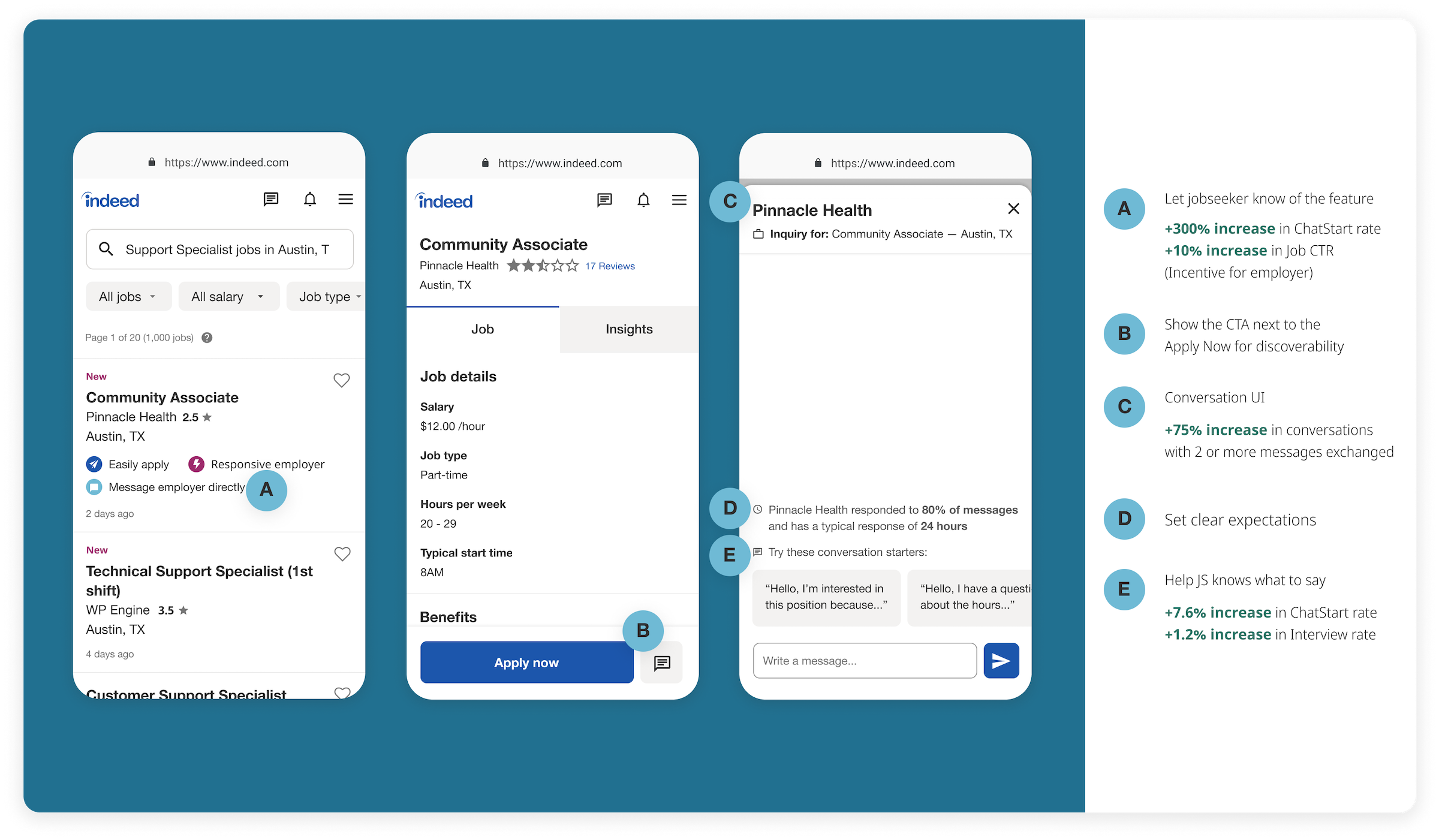
Moving to the conversation UI led to +75% increase in conversations with 2 or more exchanges.
EXPERIMENTS
Improving ChatStart rate
ANALYSIS & NEW FOCUS
Encourage jobseekers to send a message after applying to drive more impact.
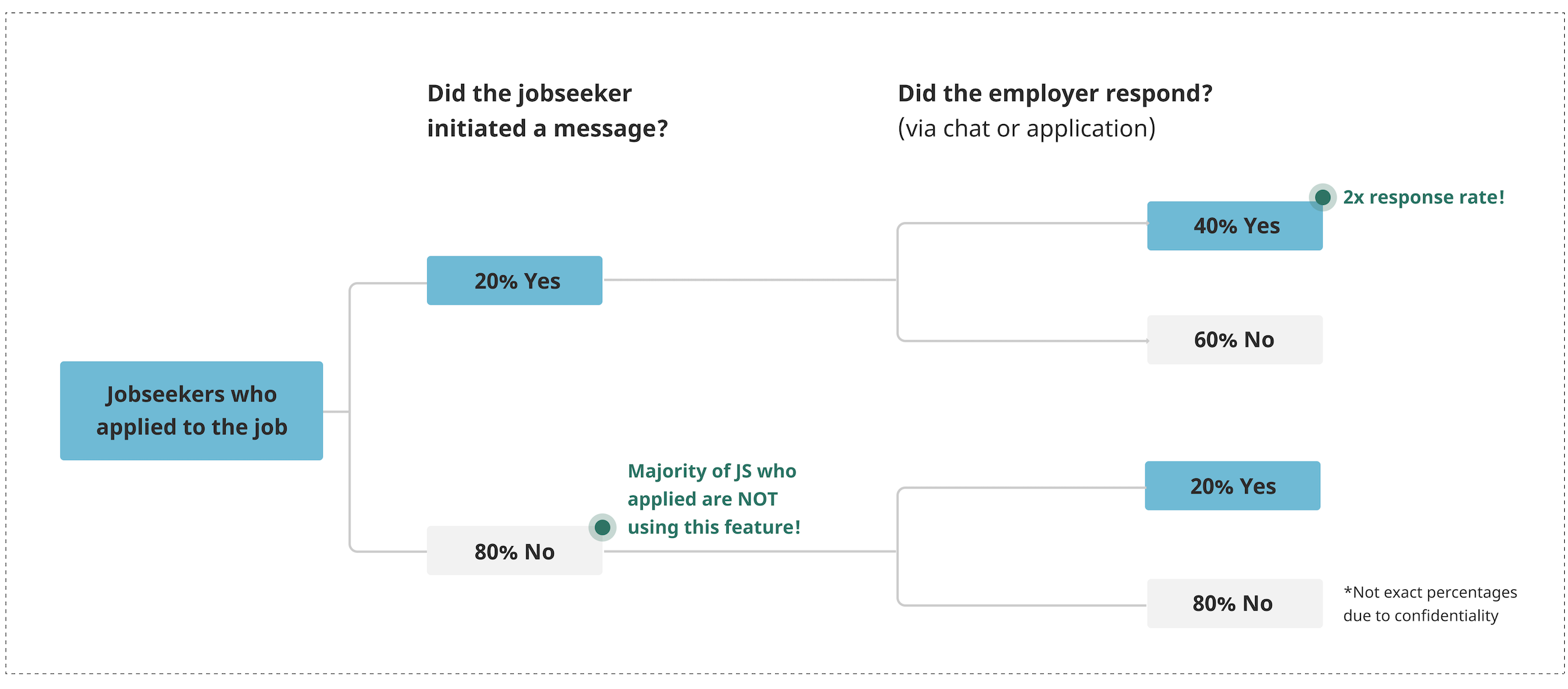
We found out that if jobseekers messaged the employers after they applied for the job, they are 2x more likely to hear back. However, the majority of JS who applied did not send a message.
Ideation
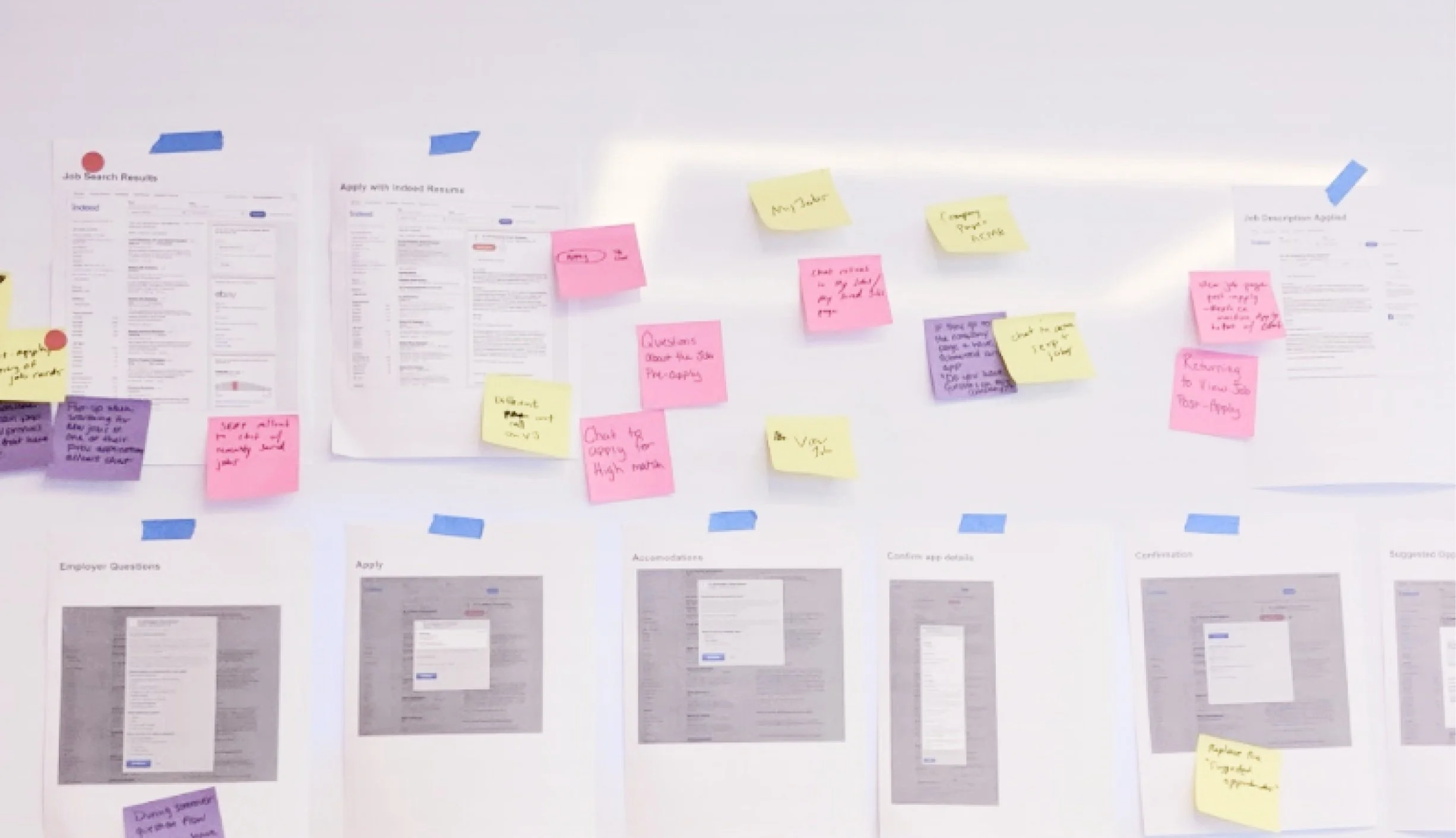
I ran a design workshop to help the team brainstorm: ”How might we get more applicants to send a message post-apply?”
This resulted in 3 experiments.
Results
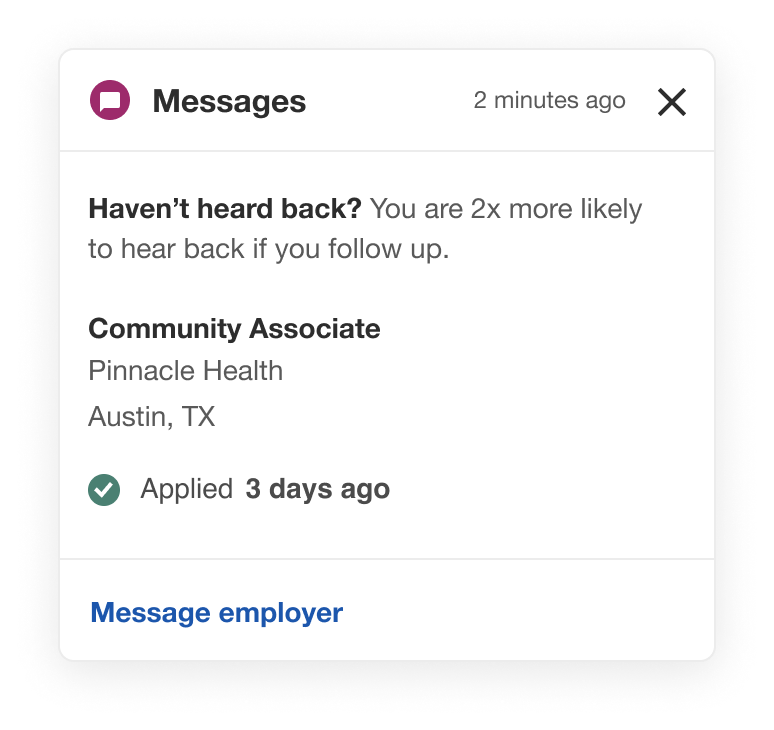
Indeed Notification +56% increase in ChatStart post apply
Post-apply Email +850% increase in ChatStart post apply
Post-apply recommendation in the job page 5X higher chat start post-apply than pre-apply
PHASE 02
Are employers willing to respond?

Target employer
Based on my weekly research, we’ve refined our target audience and identified their motivations.
Characteristics
Needed high application volume — staffing companies, competitive market
Hired for entry-level roles — qualifications are less important than engagement
Motivations
Getting faster responses — connecting with jobseekers while their attention is on the job
Saving time — light-weight pre-screening of candidates
Attracting more candidates
Providing a good candidate experience
RESEARCH
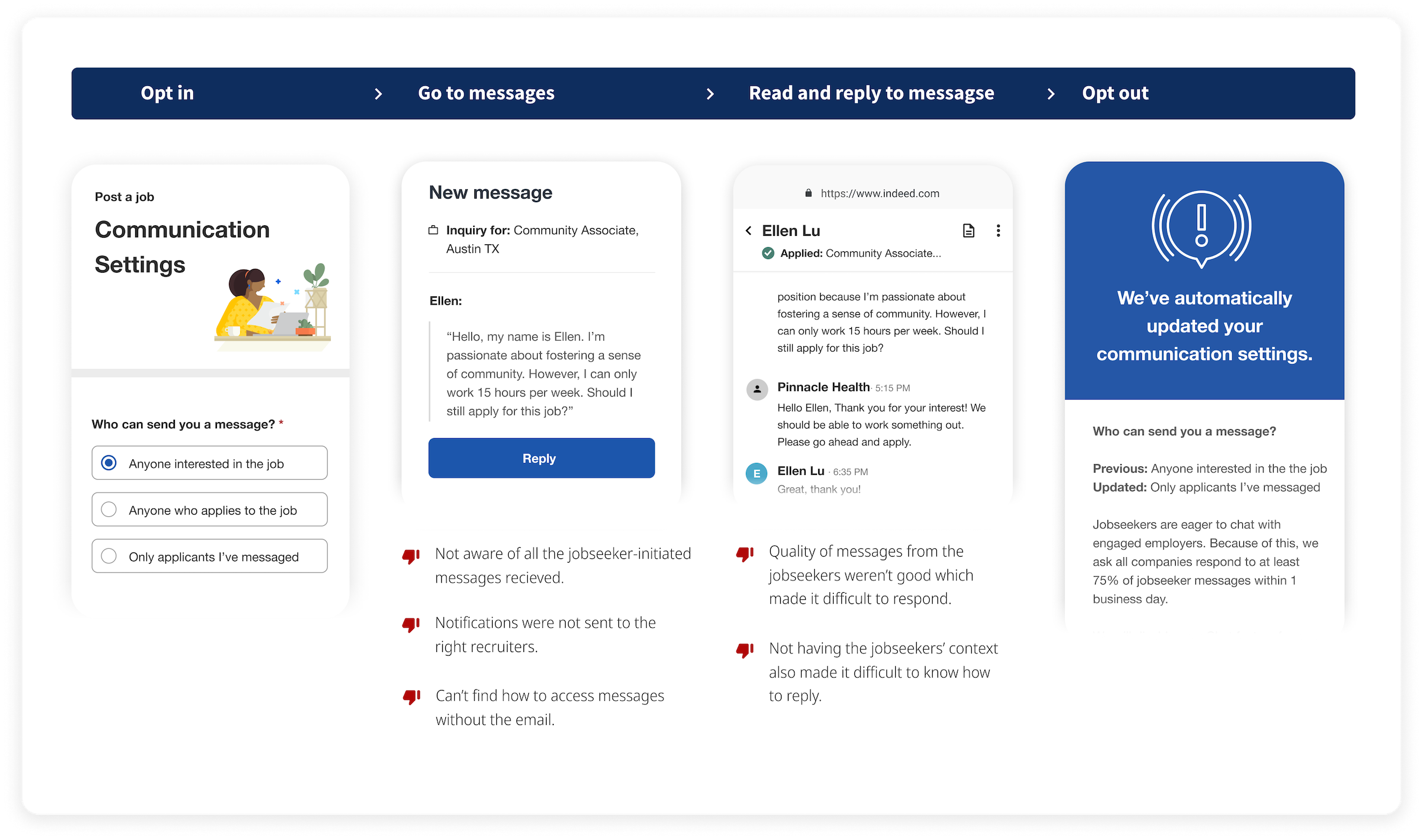
I talked to 56 employers to understand why they didn’t respond to messages.
The user interviews were conducted weekly over the course of a quarter. See the key problem areas based on research below.
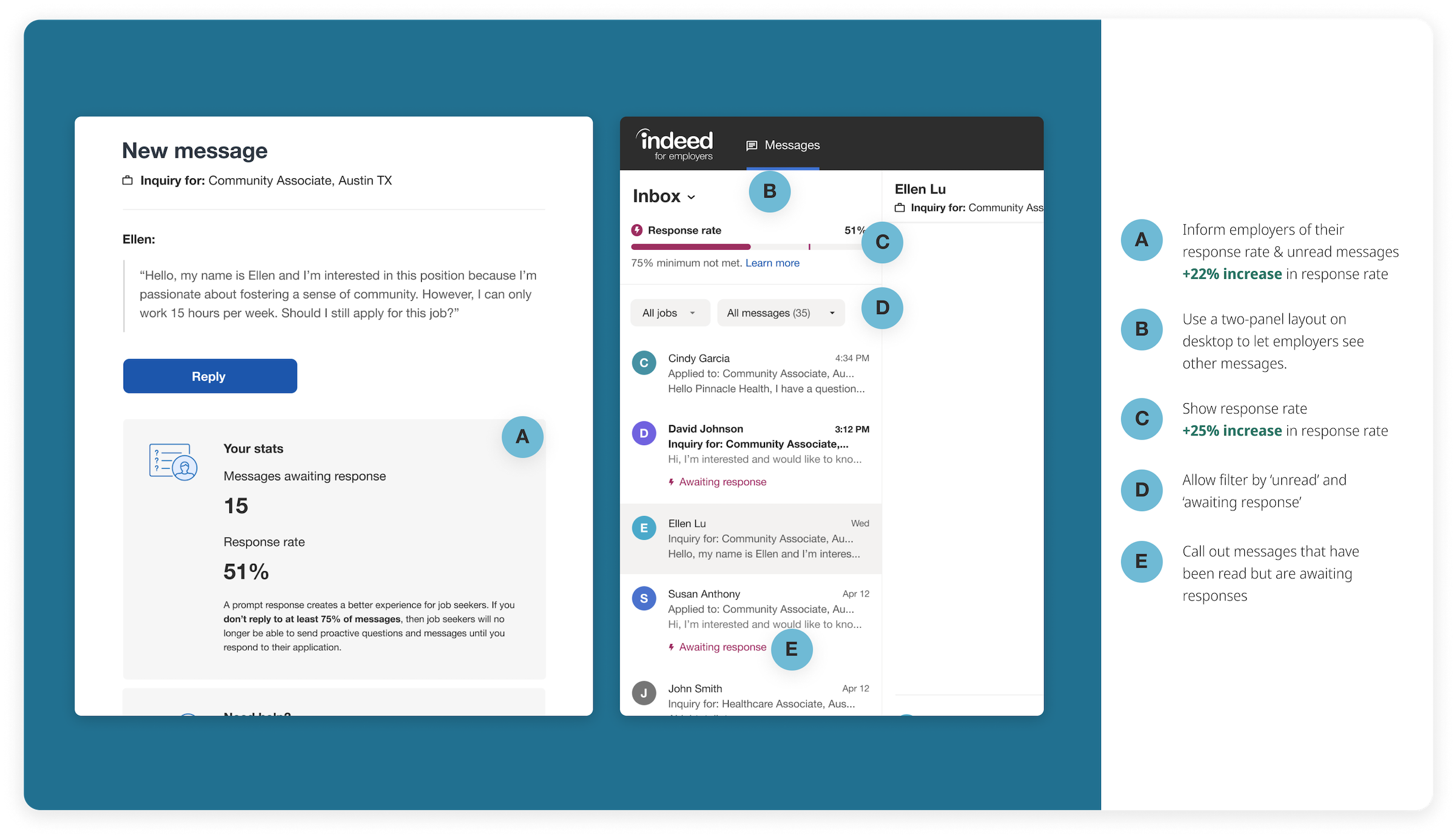
FEEDBACK 01
Employers weren’t aware that some messages exist or forgot to respond.
We ran multiple experiments to highlight messages that are awaiting response.
FEEDBACK 02
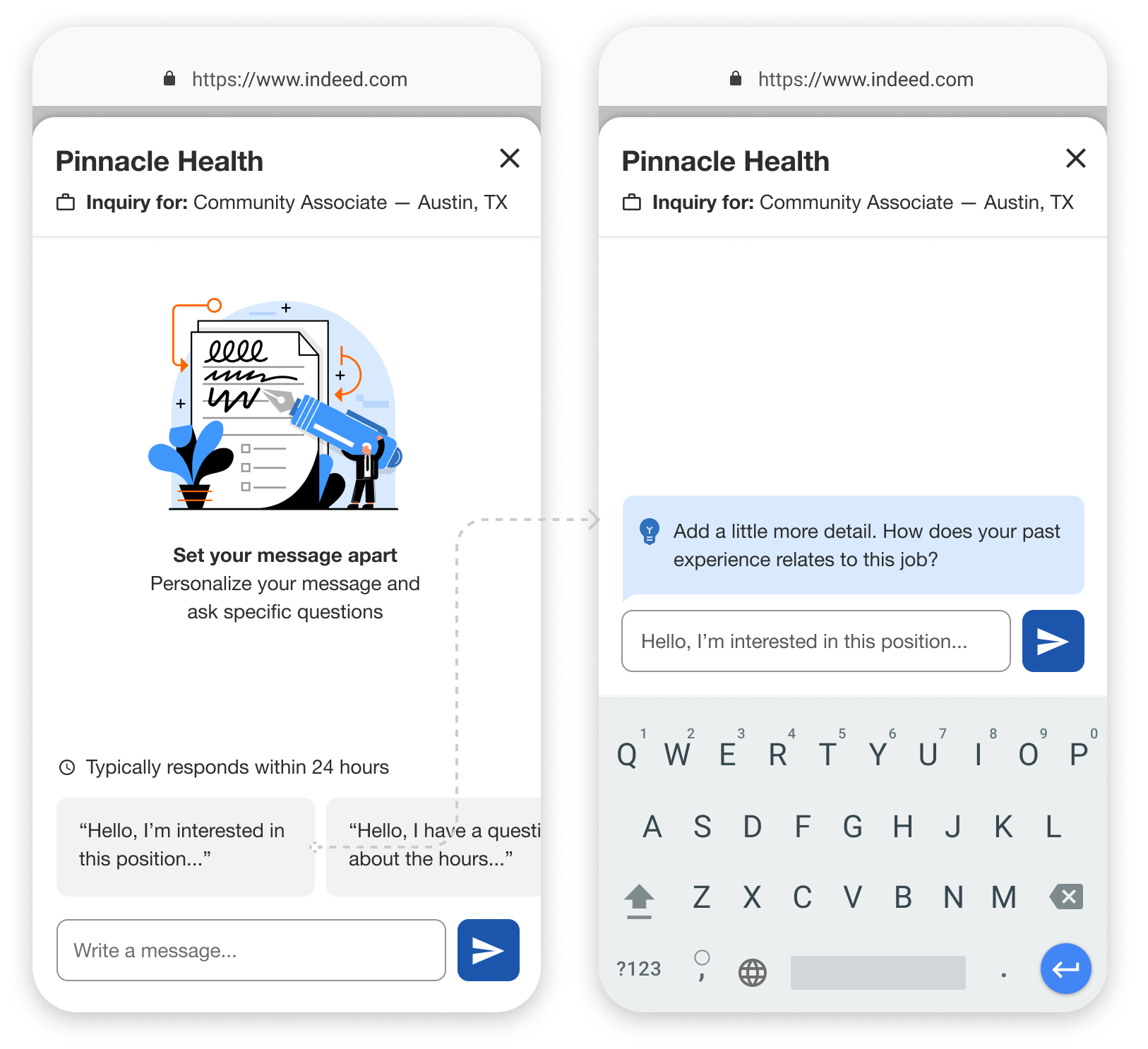
Employers received poor quality messages.
We encouraged jobseekers to compose higher quality messages:
Personalized
Show serious intent
Ask questions about qualification
+40% increased in word count per message.
FEEDBACK 03
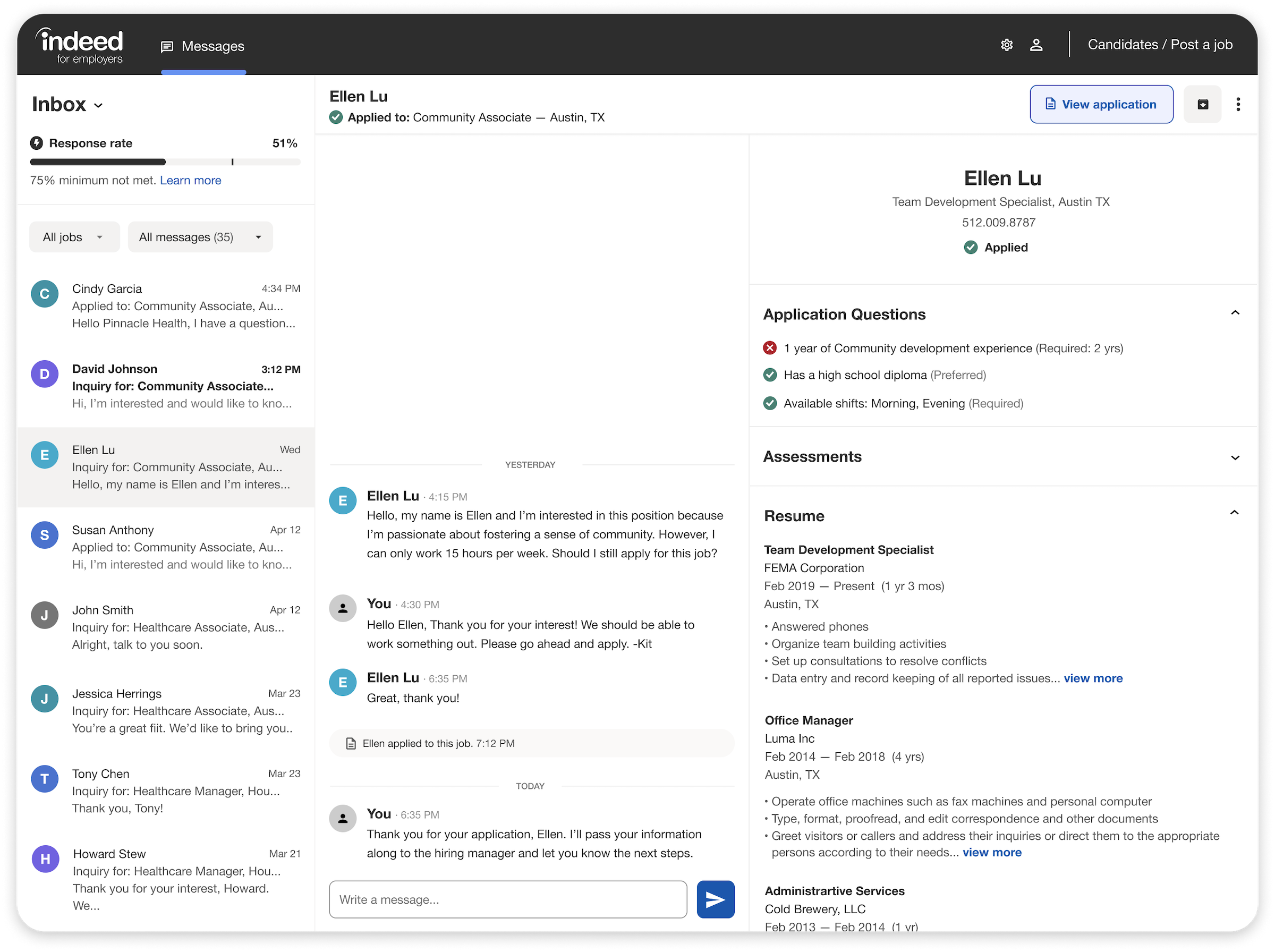
Employers did not have enough information about the jobseekers.
We want to show the application or resume alongside the messaging interface. The MVP was just a link to the application.
+75% increase in Interview request Rate
STATUS
Acquired by core Indeed Messaging
Our team proved the value of this concept: 2x higher engagement.
PROJECT-HANDOFF
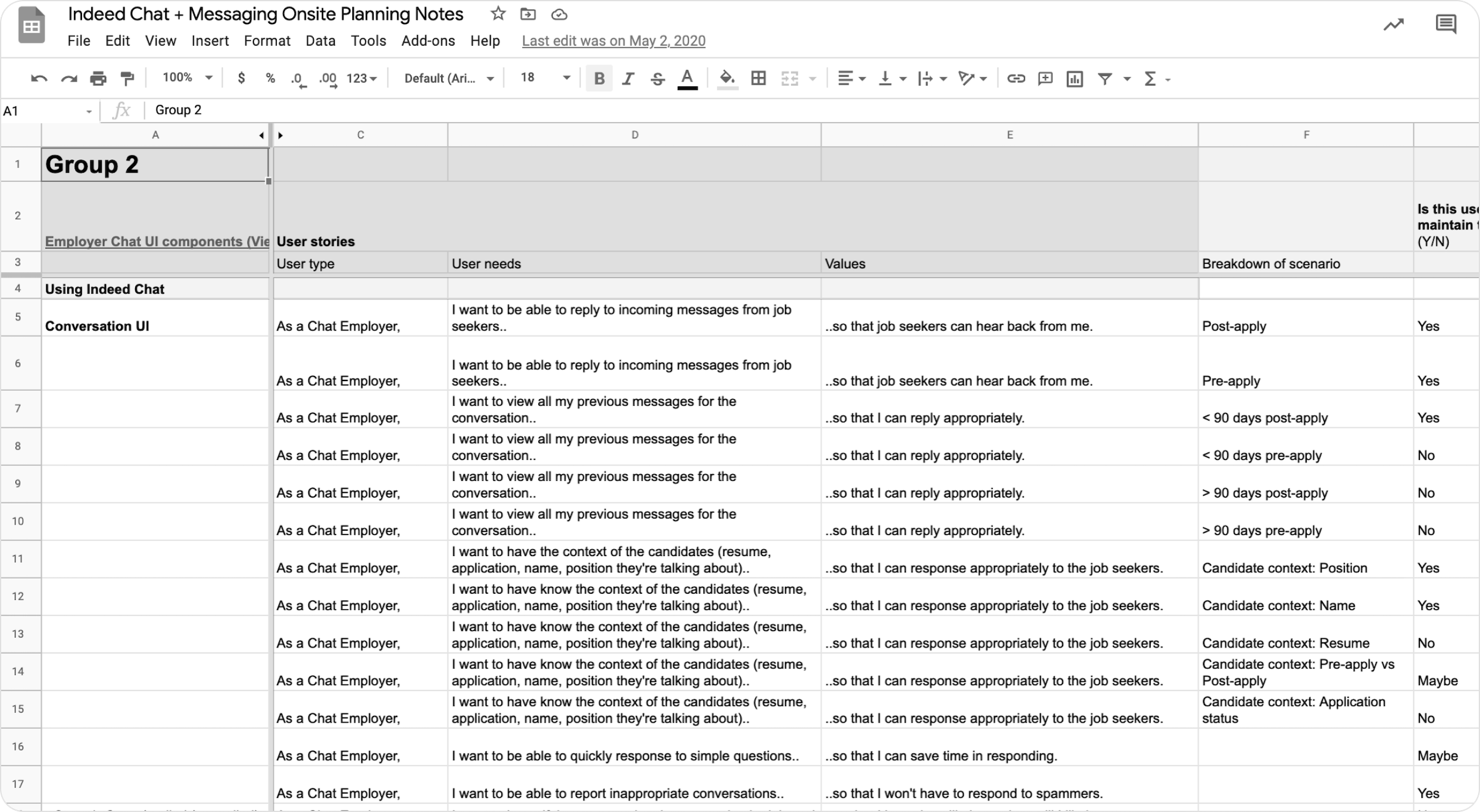
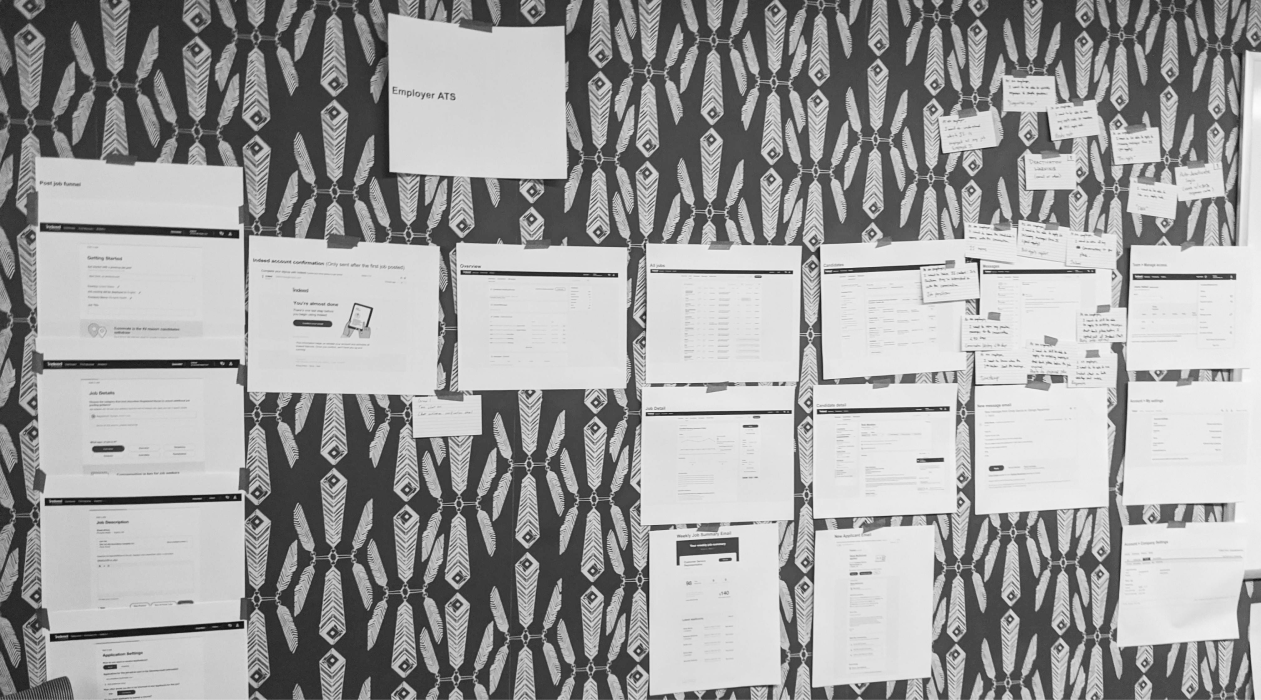
I led a project-handoff workshop to integrate with the Indeed Messaging team.
As an Incubator project, we needed to move quickly and weren’t able to get on the Indeed Core Messaging team’s roadmap for integration initially. So, we built our own messaging platform to validate this concept. Now, that we’ve proved the concept, we want to consolidate our application with the core Indeed Messaging, so that users will only need to go to one place for messaging.
In the workshop, we prioritized and mapped user stories to where they should live within the Indeed ecosystem. After the workshop, the Indeed Messaging team built this feature into the core experience. We reached a million ChatStarts several months later.